Irregular periods are common, and they do not always mean something is wrong. Your cycle can shift because of stress, weight changes, hormonal fluctuations, illness or a different stage of life. But when periods become consistently irregular, unusually heavy, very painful, or noticeably different from your usual pattern, it is worth getting yourself evaluated.
Knowing what is normal for your own cycle makes it much easier to notice when something has actually changed, and when it is time to see a gynaecologist rather than wait it out.
What Counts as an Irregular Period?
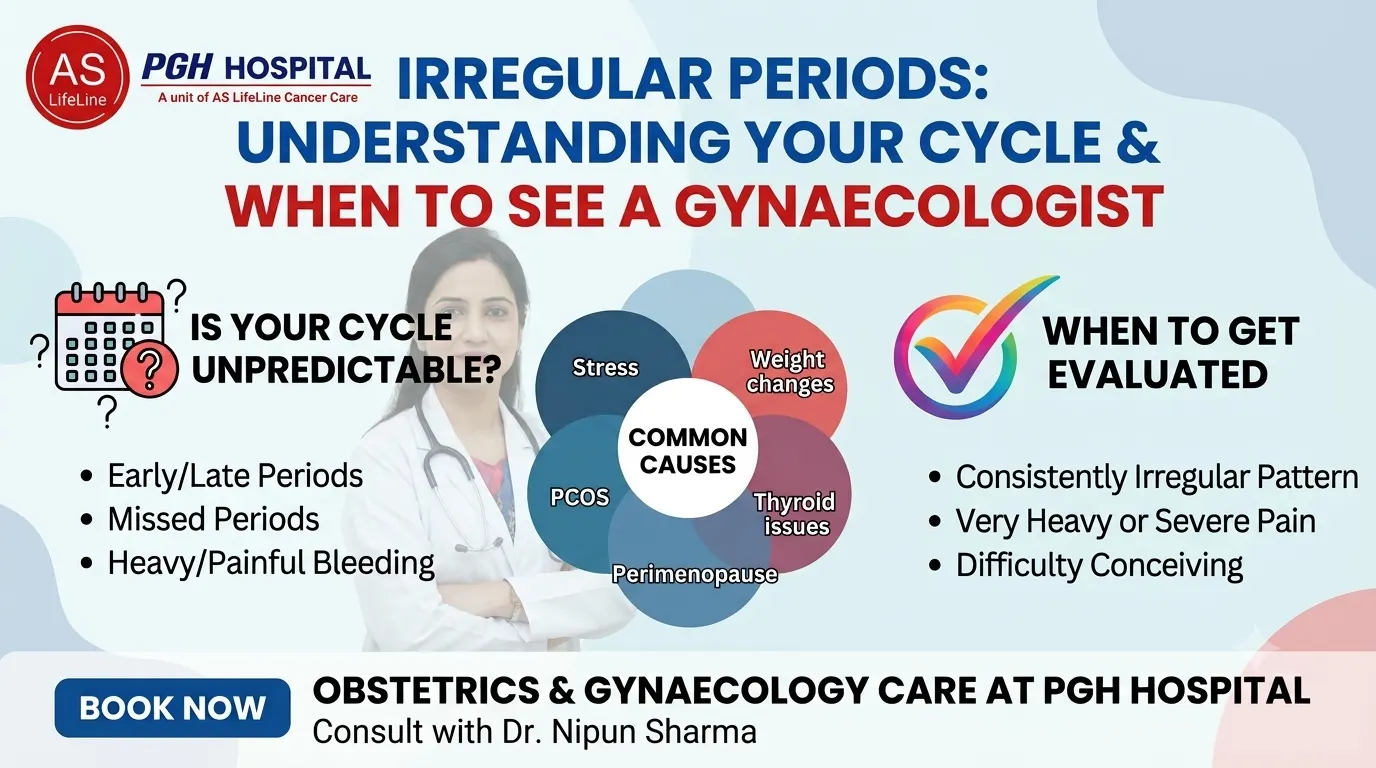
An irregular period means your cycle has become unpredictable or has changed significantly from your usual pattern. Periods do not need to arrive on the exact same day every month, and an occasional early or late one is not usually a concern. You may have irregular periods if you notice:
- Periods arriving much earlier or later than usual, or frequently missed altogether
- Bleeding that lasts much longer or shorter than normal, or is noticeably heavier
- Bleeding between periods
- A previously regular cycle suddenly becoming unpredictable
How often the change happens, how long it lasts, and whether you have other symptoms all matter more than any single missed period.
What's Actually Causing It?
- Stress and routine changes: Stress affects the hormones controlling ovulation, and major shifts in sleep, exercise, diet or travel can do the same.
- Weight changes: Significant weight gain or loss, very restrictive diets or excessive exercise can affect hormone levels and ovulation.
- Polycystic ovary syndrome (PCOS): PCOS can interfere with regular ovulation and often comes with acne, excess hair growth or difficulty conceiving, but irregular periods alone don't confirm it. Proper evaluation is needed.
- Thyroid problems: Both an underactive and overactive thyroid can change your cycle, often alongside tiredness, weight changes or feeling unusually cold or hot.
- Perimenopause: As menopause approaches, hormone levels become less predictable, though very heavy bleeding or bleeding after menopause should still be checked.
- Pregnancy: A missed period can sometimes be an early sign, worth confirming with a test if pregnancy is possible.
When Should You See a Gynaecologist?
An occasional unusual period is generally less concerning than a pattern that continues for months, or a sudden change after years of regularity. It's worth seeking medical advice if you have:
- Very heavy bleeding that affects your daily activities
- Bleeding between periods or after intercourse
- Severe period pain that disrupts normal activities
- Periods that regularly last longer than usual
- Repeatedly missed periods without a clear reason
- Difficulty becoming pregnant alongside irregular cycles
There is often a simple explanation, but getting these checked helps find the actual cause rather than guessing.
What Happens During the Consultation?
Your gynaecologist will typically start by asking about your periods and what has changed: when your last period started, how long your cycles usually last, how heavy the bleeding is, and whether you have pain, bleeding between periods, or noticeable changes in weight, skin or hair.
Depending on your symptoms, they may suggest a pregnancy test, blood tests or a pelvic ultrasound. The aim is to understand why your periods have changed and treat the underlying cause, not just the bleeding pattern. Treatment itself depends entirely on the cause, whether that's stress and lifestyle, thyroid management, PCOS-related hormonal treatment, or addressing a specific gynaecological condition, so there is no single fix for irregular periods.
The Bottom Line
Most changes in your cycle are not caused by something serious, but heavy bleeding, severe pain, repeated missed periods or bleeding between periods should not simply be accepted as normal. Dr Nipun Sharma leads Obstetrics & Gynaecology care at PGH Hospital. If your periods have felt different from your normal pattern for a while, book a consultation to get a clearer answer instead of waiting it out.
FAQs
How irregular can a period be and still be normal?
Are irregular periods always caused by PCOS?
Can stress make your periods irregular?
Can irregular periods affect fertility?