Cancer symptoms do not always look obviously serious. Some begin as everyday complaints people blame on stress, ageing or a busy routine, which is exactly why early warning signs can be easy to overlook, especially when they seem to come and go.
Having one of these symptoms does not mean you have cancer. Many have simple, non-cancerous explanations. The concern arises when a symptom is persistent, unexplained, keeps returning, or appears alongside other unusual changes. Here are seven signs worth taking seriously, and what makes them worth a proper look.
Signs Worth Getting Checked
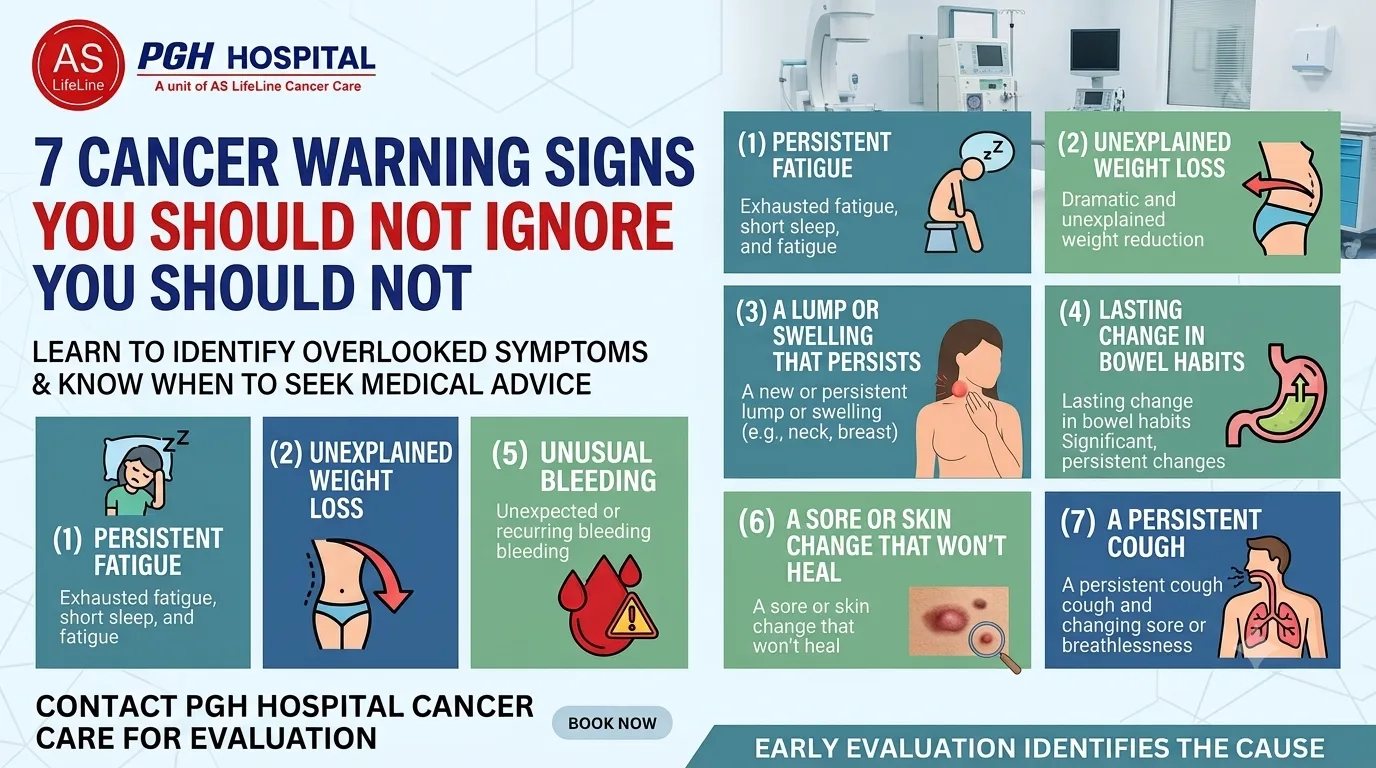
1. Persistent fatigue that rest doesn't fix
Tiredness after a demanding day is normal, but ongoing fatigue with no obvious cause can be linked to anaemia, thyroid problems or, in some cases, cancer affecting metabolism. It matters more when it continues for weeks or comes with weight loss, pain or bleeding.
2. Unexplained weight loss
Losing weight without changing diet or exercise has many possible causes, but cancer can also affect appetite, metabolism and digestion. There is no set amount that signals concern; what matters is an ongoing, unexplained change, especially alongside fatigue or bowel changes.
3. A lump or swelling that persists
Most lumps are not cancerous, but one that lasts several weeks, keeps growing, feels hard or fixed, or shows up in the breast, neck, abdomen, armpit or groin deserves examination. Painless does not mean harmless.
4. A lasting change in bowel habits
Constipation, diarrhoea, narrower stools or a feeling of incomplete emptying are usually linked to diet or minor digestive issues, but a pattern that persists, especially with blood in the stool or unexplained tiredness, can occasionally point to colorectal cancer.
5. Unusual bleeding
Blood in the stool or urine, coughing up blood, or bleeding between periods or after menopause often has a simple cause, but unexplained or recurrent bleeding should always be evaluated rather than dismissed.
6. A sore or skin change that won't heal
Minor cuts and sores usually improve with time. A sore, ulcer or mole that keeps bleeding, crusting, changing shape or growing instead of healing is worth a proper examination.
7. A persistent cough
Most coughs come from infections, allergies or reflux, but one that lingers for weeks, especially with coughing up blood, chest discomfort, breathlessness or unexplained weight loss, should be assessed rather than waited out.
When Should You See an Oncologist?
Not every unusual symptom needs an immediate oncology consultation. In most cases, the first step is your primary doctor or an appropriate specialist, who can decide whether further tests or a referral are needed. An oncology consultation typically follows once an examination, scan, blood test or biopsy has raised a specific concern, at which point an oncologist can help interpret the findings and discuss appropriate treatment options.
It is worth seeking medical advice when a symptom:
- Persists longer than expected
- Keeps returning without an obvious reason
- Gradually becomes worse over time
- Is accompanied by unexplained weight loss
- Causes unusual bleeding
- Occurs alongside a new lump or swelling
- Appears together with persistent pain or fatigue
Early evaluation does not necessarily mean cancer will be found. It helps identify the actual cause and makes sure appropriate care is not unnecessarily delayed.
Taking the Next Step
Cancer does not always announce itself with a dramatic symptom, so persistent or unexplained changes are worth acting on rather than watching indefinitely. The Cancer Care Department at PGH Hospital brings surgical, medical and radiation oncology together under one roof, with cases reviewed by a tumour board for a coordinated treatment plan. If you notice a sign you shouldn't ignore, contact us to arrange an evaluation rather than relying on a wait-and-see approach.
FAQs
Does unexplained weight loss always mean cancer?
Can persistent tiredness be a sign of cancer?
Should every lump or swelling be checked for cancer?
When should I see a doctor about a possible cancer symptom?